Get the latest food, drinks and things to do news directly to your inbox. Subscribe Now
Learn about the Dreyfus Affair and its modern relevance at this free lecture in NYC next week

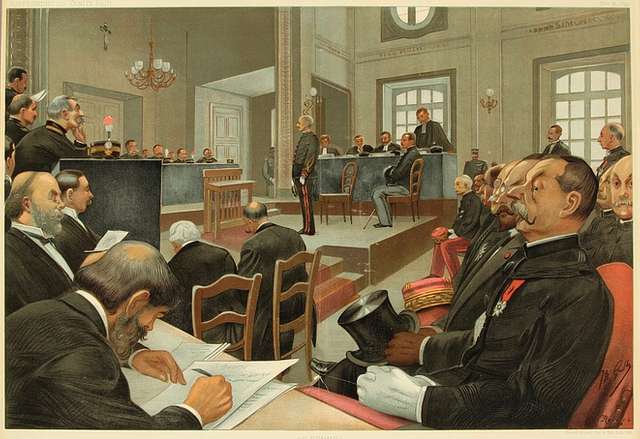
The Dreyfus Affair, one of 19th-century France’s most notorious political scandals, began in 1894 when French army officer Alfred Dreyfus was falsely accused of spying for Germany. His conviction, rooted in antisemitism, was later revealed as a conspiracy and, after years of appeals, the verdict was finally overturned in 1906. Beyond the courtroom, the affair became a media spectacle, with newspapers and illustrated caricatures turning Dreyfus into a symbol of public debate and prejudice.
Next week, the Center for Jewish History is hosting a lecture that dives into this fascinating intersection of politics, media and antisemitism. Leon Levy Fellow Dr. Andrew Kotick, a historian at Pratt Institute, will explore how satirical drawings and cartoons didn’t just mock Dreyfus, they shaped public opinion, defined social belonging and made antisemitism a mass phenomenon.
Using examples from the illustrated press, especially the popular weekly Le Rire, Kotick will show how ridicule functioned as a political tool, influencing emotions, opinions and the broader political landscape. The talk offers a fresh perspective on how humor and visual culture can both illuminate and weaponize social prejudice.
The lecture is happening on Wednesday, March 25 at 7pm at the Center for Jewish History in New York City. Admission is pay what you wish, but registration is required here. The program will also be available to stream online.
Given the levels of antisemitism Jews face around the world today, examining the Dreyfus Affair through this lens feels essential. It may even offer insight into how to confront it on a daily basis.