Get the latest food, drinks and things to do news directly to your inbox. Subscribe Now
Will NYC’s city-run grocery stores carry kosher food?

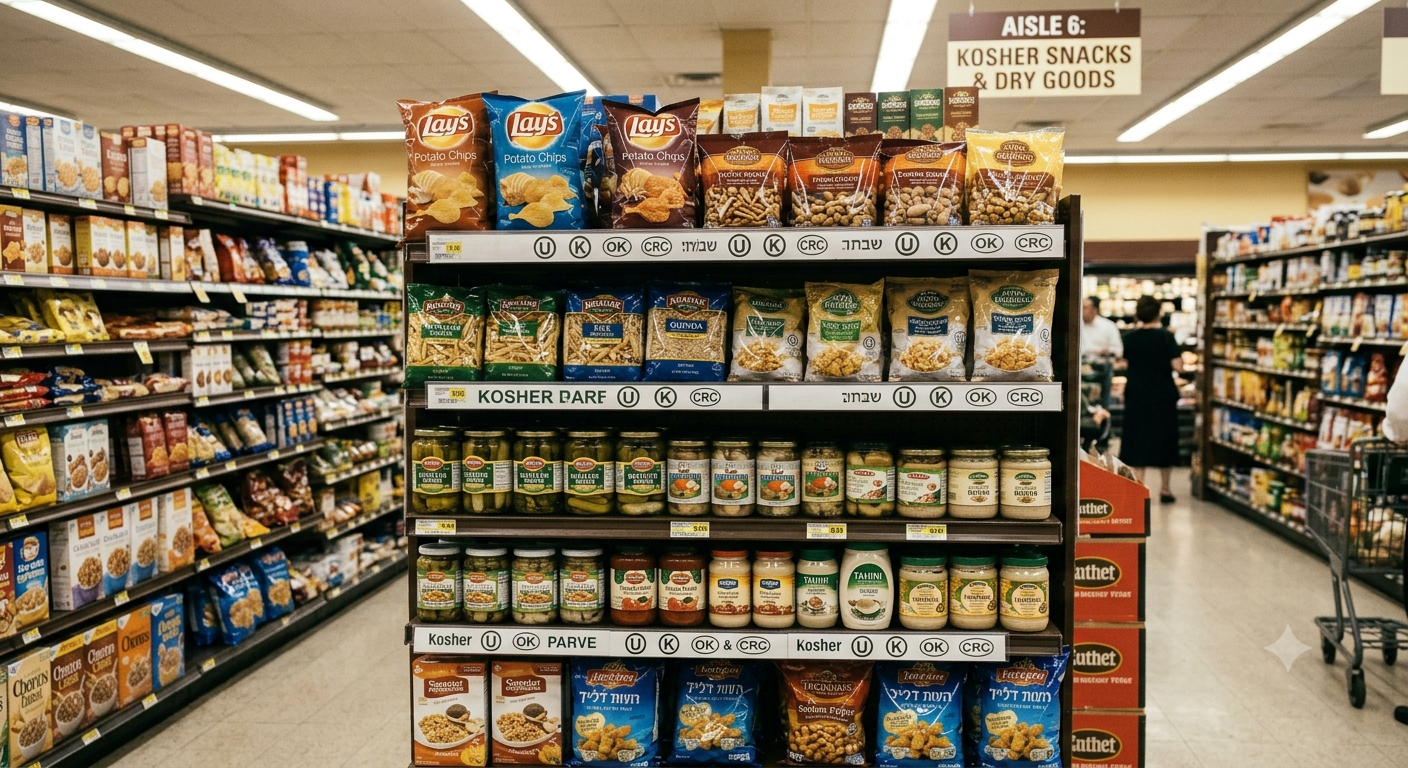
Mayor Zohran Mamdani’s plan for city-run grocery stores has sparked plenty of debate, but if you’re an observant New Yorker, you probably have a single practical question in mind: will the supermarkets carry kosher food?
The short answer is, probably, yes, and we’re not just guessing.
Last week, the mayor unveiled more details about the city’s first five municipally supported grocery stores, which are expected to open beginning in 2027. The stores will sell a “core basket” of groceries—including fresh produce, meat, dairy and pantry staples—at roughly 30% below typical retail prices, with the city subsidizing the difference. The goal is simple: make groceries more affordable as food prices continue to climb.
What the city hasn’t released is a specific product list or the names of the grocery operators that will actually stock the shelves. Those decisions will come later through a competitive bidding process, with proposals due in October. That means nobody can say today whether you’ll find Kedem grape juice, Empire chicken or Bissli on the shelves. Still, the city’s own request for proposals (RFP), released July 27, gives a real answer instead of just a hunch: operators must consistently stock items across standard grocery departments, including meat, dairy, seafood, frozen foods, shelf-stable goods, produce, prepared foods and household items. More directly, the product mix operators offer must cater to diverse dietary needs, explicitly including kosher options alongside halal, gluten-free, dairy-free, vegan and diabetic choices.
That’s a meaningful upgrade from “probably” since it’s now a written procurement requirement that bidders have to meet to win a contract.
That said, a requirement on paper isn’t the same as a plan in motion. Both the Orthodox Union’s kosher division nor Kof-K Kosher certification, two of the most widely used kosher certifiers, told JNS that Mamdani’s office had not contacted them about kosher food at the city-run stores. That’s not necessarily alarming since retailers generally don’t need to consult a kosher certification agency when they’re simply reselling packaged goods that already carry kosher certification. A certifier would only need to get involved if the city-run stores planned to repackage products or run their own kosher-supervised departments, and the OU said it hasn’t seen anything in the RFP suggesting that’s the plan.
In neighborhoods with sizable Jewish populations (think parts of Brooklyn, Queens or even the Upper West Side) stocking already-certified packaged staples is straightforward and cheap: kosher milk, yogurt, packaged goods, challah around Shabbat and frozen kosher items are already standard in most mainstream New York supermarkets. Given the RFP’s explicit language, there’s good reason to expect the city stores to follow that same pattern.
Fresh kosher meat and poultry are a different story. The RFP does require operators to stock a meat department, but nothing in the current plans indicates full-service butcher counters or specialized kosher meat handling and supervision, the kind of separate sourcing and certification that fresh kosher meat requires and that packaged goods don’t. Notably, critics of the plan have pointed out an apparent tension in the RFP itself: it calls for a “limited SKU” model to keep costs down while simultaneously requiring full grocery departments plus kosher, halal, vegan and other dietary categories, a combination that may be harder to deliver in practice than it looks on paper.
So will New York’s city-run grocery stores make kosher shopping cheaper?
For packaged staples, the odds just got better since the city has put it in writing that bidders need to cover kosher options. For families hoping these stores become a lower-cost alternative to Seasons, Gourmet Glatt or other kosher supermarkets, it’s still too early to count on that. Until the city announces which operators won the bid and exactly what’s going on the shelves, the kosher aisle remains one of the biggest open questions, even with a requirement now on the books.