Get the latest food, drinks and things to do news directly to your inbox. Subscribe Now
A Brooklyn baker makes the case for kosher mandel bread without the crunch

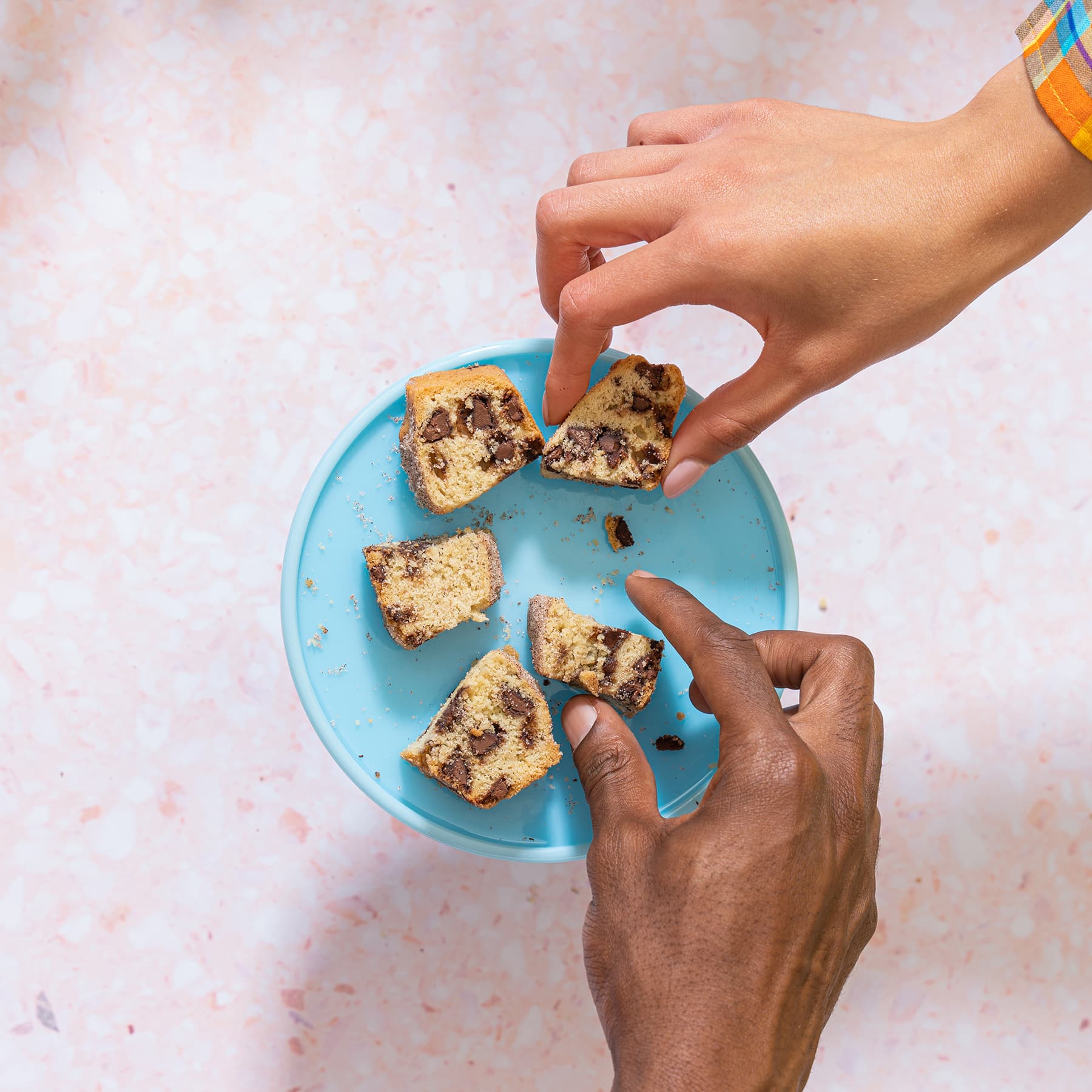
If there were a competition for the perfect dessert bite, I would nominate Wandel’s milk chocolate and cinnamon sugar square. A tender reworking of traditional mandel bread—the twice-baked cookie rooted in Ashkenazi Jewish baking—Stephanie Berlin’s version has the softness of a properly baked cookie and the substance of a blondie, with a family resemblance to biscotti.
Having tried all three varieties, I’m inclined to admire the brevity of the lineup. Milk chocolate with cinnamon sugar (my favorite) shares the collection with zesty lemon and poppyseed, while dark chocolate with sea salt completes a selection that makes little argument for expansion.
Despite its name, mandel bread is a cookie, traditionally twice-baked and familiar to generations of Ashkenazi Jewish households. Its Yiddish name, mandelbrot, means “almond bread,” although contemporary versions frequently dispense with the nuts. The resemblance to biscotti lies partly in that second baking, which produces its characteristic crunch. Wandel forgoes it.
For founder Berlin, that departure predates any commercial ambitions. Her mother, Judy, made unusually soft mandel bread when Berlin was growing up in Chicago, leaving the center gooey enough to invite questions about its classification.
“I always said, ‘Mom, is this actual mandel bread?’” Berlin recalls. “We would never let it cool down.”
Chicago supplied the recipe, but New York supplied the beginnings of a business. Berlin, who now lives in Brooklyn, spent more than a decade working in entertainment, including film publicity and awards screenings. Furloughed during the pandemic, she turned to baking as a way of tending to her mental health. By October 2021, she was selling at an Upper East Side farmers market, developing relationships with customers who returned each week.
“Brooklyn is my home,” she says. “The first place I lived where I feel tethered.”
Local accounts followed, including Zabar’s and Butterfield Market. Demand eventually exposed the limitations of shared-kitchen production: additional orders did not necessarily make the economics more workable.
“People love the product and brand. How do I make this operable long term?” she remembers asking herself.
She found formulators in Colorado in 2023, then undertook a lengthy search for a manufacturing partner. The current pouches launched in April 2025. According to Berlin, an initial Whole Foods rollout followed that September, reaching 13 stores across Manhattan, New Jersey and Long Island.
Kosher certification was essential to the relationships she wanted with synagogues and JCCs. Berlin, who is Jewish but does not keep kosher, wanted the product to be accessible to the community at the center of its story. Wandel’s website identifies its certification as KOF-K.
The other flavors have their own origins. A friend whose father is a baker suggested dark chocolate with sea salt. Lemon emerged from Berlin’s affection for lemon loaf and lemon squares, developed with a woman who helped her bake.
Her next ambition is gluten-free Wandel, a frequent customer request that acquired personal urgency after her own celiac diagnosis. She wants to get the texture right before offering it.
For now, the original remains a particularly intimate form of product development: a daughter selling the thing she could never wait for her mother to finish cooling.