Get the latest food, drinks and things to do news directly to your inbox. Subscribe Now
A new exhibit tells 250 years of American Jewish history with 75 objects

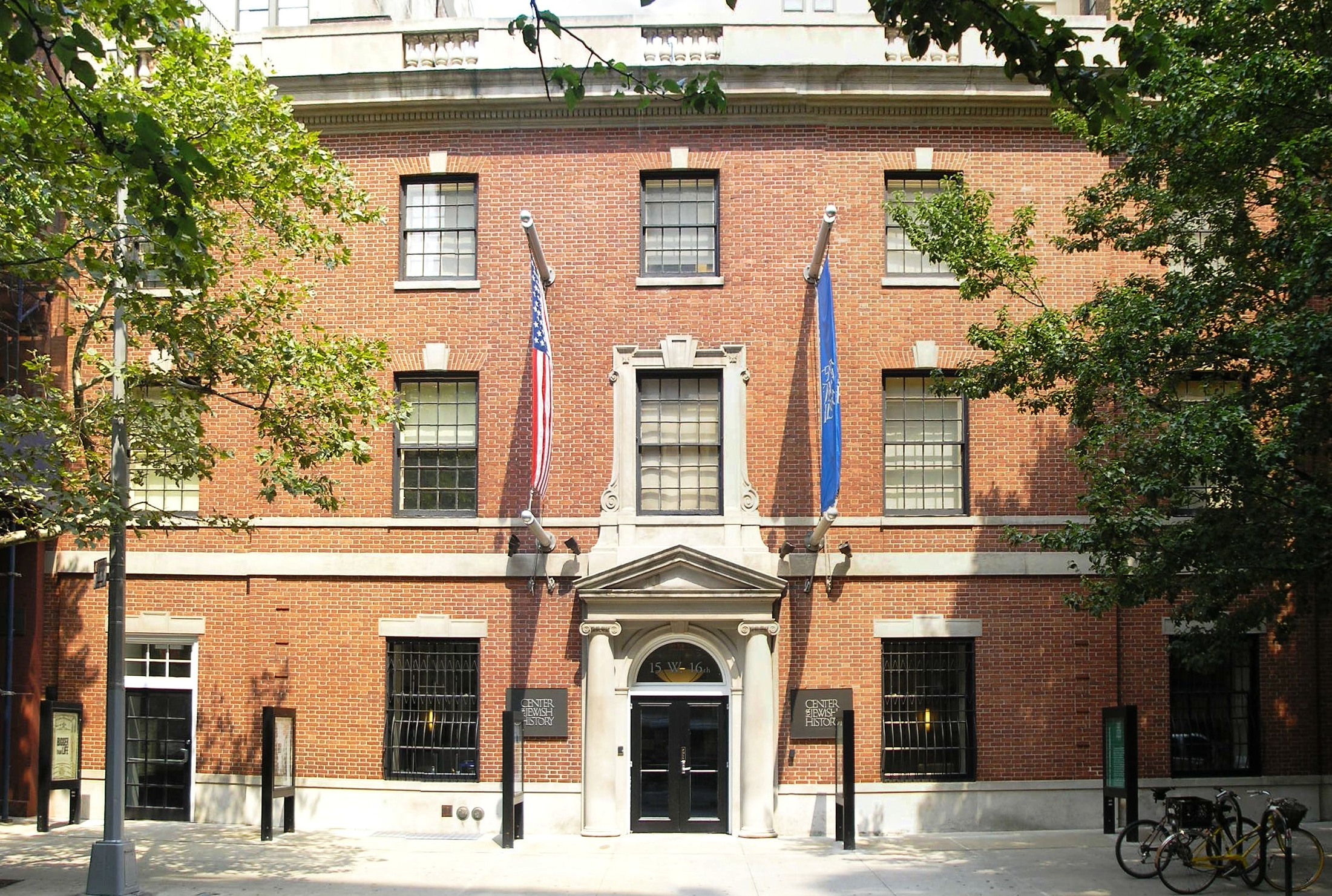
Starting this week, the Center for Jewish History on West 16th Street is home to “All We Have Standing Between Us: 250 Years of Jews and American Democracy,” the kind of show that might have you consider cancelling your Sunday plans to go look at things.
The premise: American Jews have been arguing about, building and occasionally getting shut out of this country’s democratic project since before there was a country to argue about. The exhibition, a joint production of the American Jewish Historical Society (AJHS) the Center for Jewish History and the Yeshiva University Museum, pulls that story into seven sections through 75 objects drawn from the AJHS archive. Among them are a handwritten letter from poet Emma Lazarus, whose words would later be immortalized on the Statue of Liberty; artifacts connected to Henry Morgenthau Jr., Franklin D. Roosevelt’s Treasury secretary and one of the highest-ranking Jewish officials in U.S. history; and material from Betty Friedan, the feminist writer and activist whose The Feminine Mystique helped spark the second-wave women’s movement.
What makes this worth the trip is the fact that marquee names like Lazarus, Morgenthau and Friedan share space with everyday people whose lives were just as much a part of the American Jewish story. Famous figures and ordinary citizens get equal billing, which is exactly the point.
There’s a podcast attached to the project, too, also called “All We Have Standing Between Us,” hosted by Gemma Birnbaum, the executive director of the AJHS, with new episodes dropping every couple of weeks through the fall. It’s a smart move: the exhibit gives you the object, the podcast gives you the story behind why it mattered and neither one requires the other. Together, they’re about the closest thing this history has gotten to a syllabus in a while.
For a city that likes to think of itself as the capital of the American Jewish experience, an exhibit that spends this much time on the messiness—the disagreements, the unfinished arguments, the parts of the story that don’t resolve neatly—feels less like a victory lap and more like the truth. You’ve got until December 31 to catch it.