Get the latest food, drinks and things to do news directly to your inbox. Subscribe Now
Thursday nights at Malka feel like a trip to Tel Aviv

When dating my now-husband, I used to describe him to friends as home. He wasn’t perfect, but he felt warm, secure, familiar in a way that was grounding. Oddly enough, a Thursday night at Malka in DUMBO—celebrity chef Eyal Shani’s Israeli kosher restaurant, with another location on the Upper East Side of Manhattan—evokes the same feeling. It feels like home.
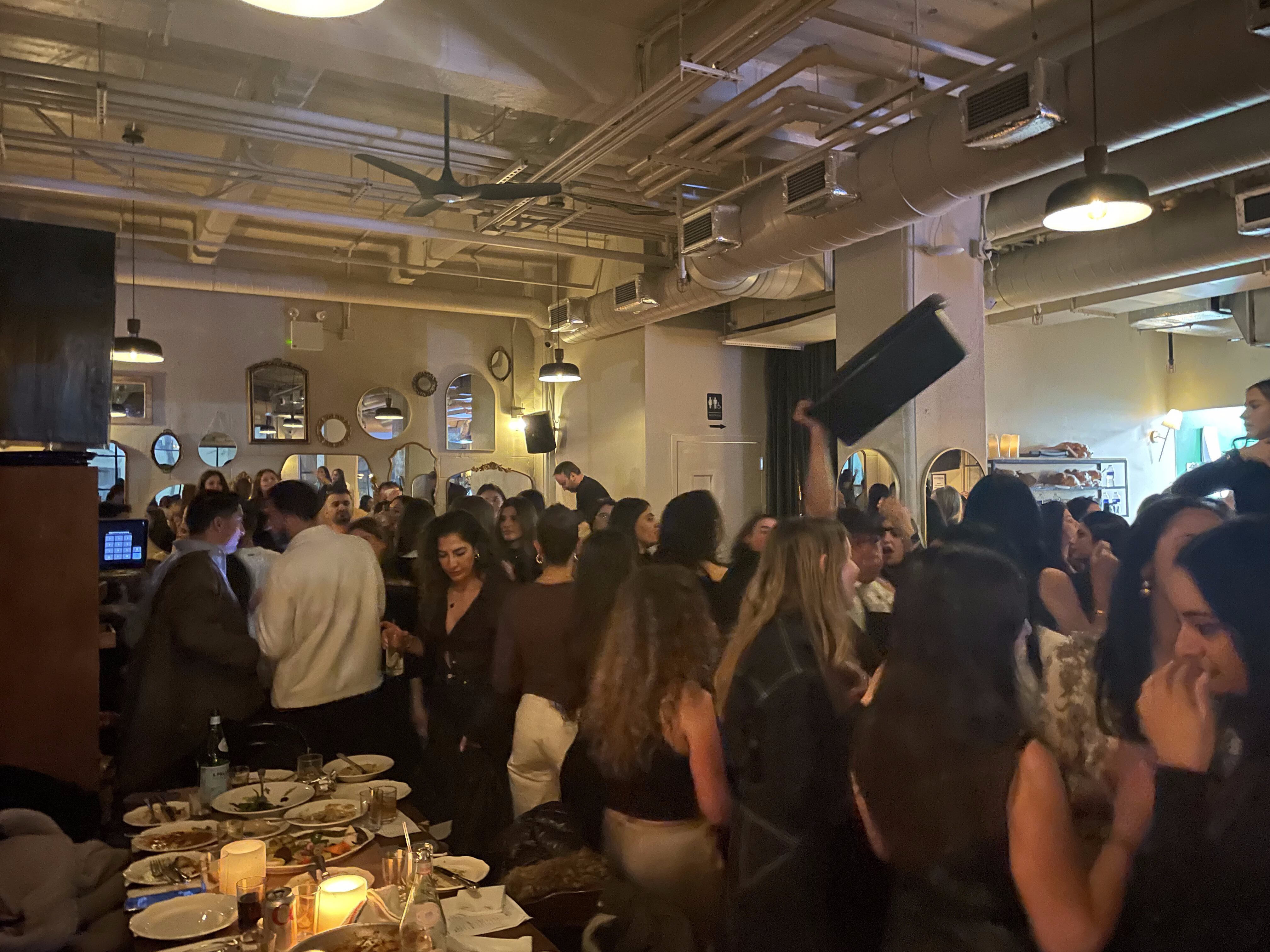
Most nights, Malka is relatively calm: a corner restaurant that once housed Nina, the now-defunct Israeli spot that, kosher or not, served what remains the best Israeli salad in New York. But on Thursday nights, Malka transforms into something else entirely: a club-staurant, complete with a DJ and dancing on tables. It’s a party that reminds its diners, who are predominantly if not entirely Jewish, that we are a community that has always existed under pressure, one that has learned to stick together in hard moments and, when possible, on the dance floor.
Consider it a new kind of local scene, one we never really had: heavily Jewish and completely kosher, touching on Israeli, unmistakably Tel Aviv—and yet screaming New York at the same time.
Catering to a non-kosher crowd remains largely uncharted territory for kosher restaurants—and if anyone could cross that frontier, it would probably be Shani, who operates wildly successful non-kosher restaurants around the world that have captivated Jews and non-Jews alike. But Malka doesn’t try to dilute itself or lure in a different audience. Instead of softening its identity, it leans fully into it. It becomes a microcosm of Jewishness and kosherness… and that’s exactly why it works.
Let’s be clear, though: it’s not perfect. Unlike other nights of the week, Thursdays at Malka usually revolve around a prix-fixe menu because a scene demands a party and a party demands a long table, which, realistically, can only be served smoothly through a format that keeps ordering efficient.
While the culinary staples are there—the excellent focaccia, the potato-stuffed chicken—the food doesn’t quite hit the way it does on quieter nights, when the kitchen isn’t overwhelmed and the staff isn’t competing with the relentlessly loud Israeli music blasting from the DJ booth (does the playlist ever change?).
The service can lag, too. Drinks take forever. Even walking up to the bar doesn’t guarantee a faster cocktail, though it’s still where you’ll want to be if you’re hoping to chat someone up.
But you’ll forget about all of that when an Omer Adam song comes on, or some older track you once sang in high school or maybe listened to recently while scrolling through videos of Israeli friends on Instagram. Suddenly, you’ll realize that for an hour or two, you didn’t feel alone. You didn’t feel the need to explain your cultural standing or your feelings about the current state of affairs. Suddenly, you felt at home.
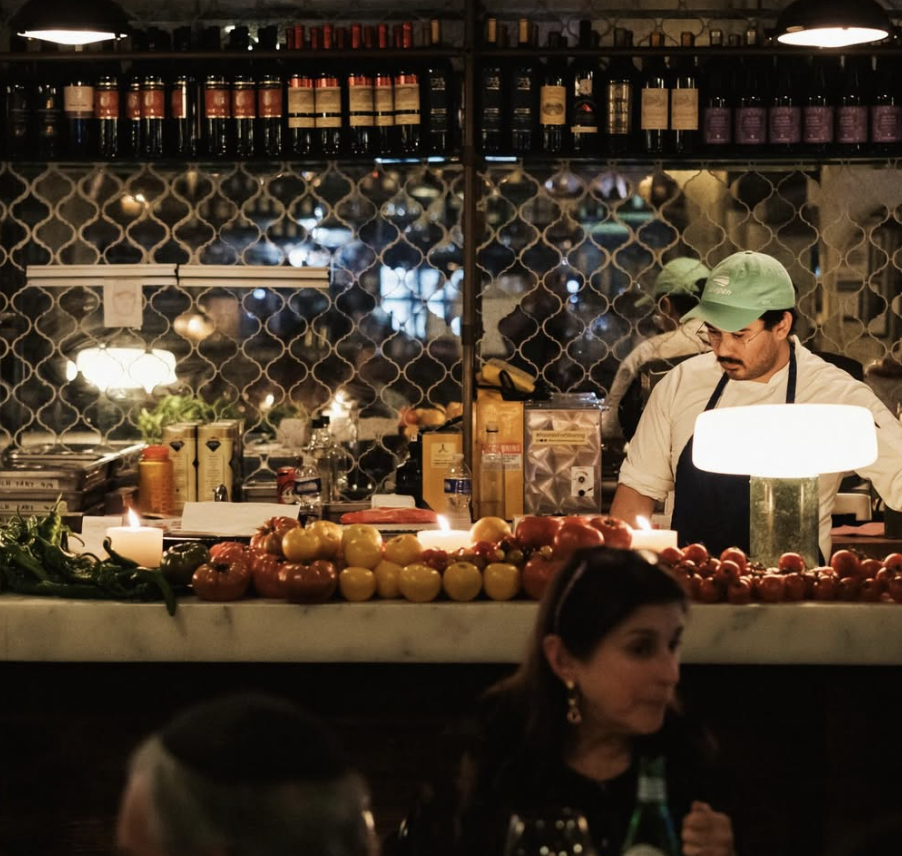
New York has always sorted its spots into familiar buckets: great food, great drinks, where to meet men, where to see and be seen, where the vibes are immaculate. A city built by lonely immigrants has long used food and hospitality as tools for comfort and belonging. But when it comes to Jews, something has always felt different. No matter how welcoming a space tries to be, it’s been hard to feel fully at home in most local destinations, especially recently.
Maybe we didn’t know we needed a place like this before October 7. Or maybe we did, and just didn’t have it yet. Either way, a Thursday night at Malka in Brooklyn feels like the warm hug we’ve been craving all week.