Get the latest food, drinks and things to do news directly to your inbox. Subscribe Now
‘A Walk on the Moon’ is a new Off-Broadway musical set in the 1969 Catskills

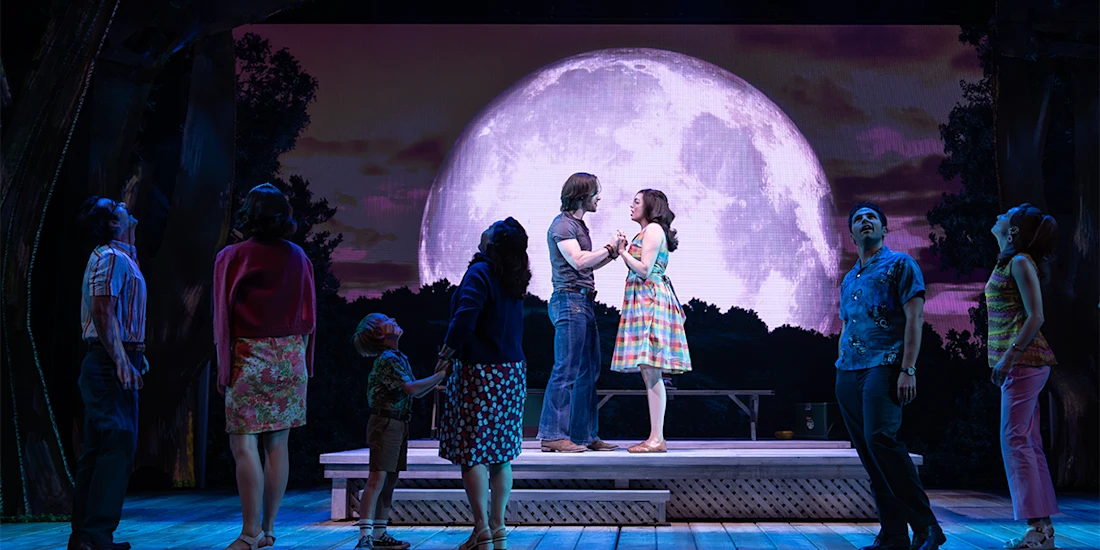
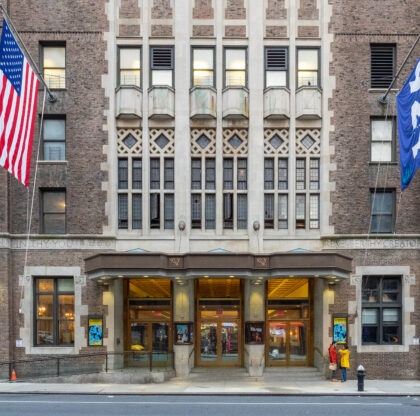
A new musical called A Walk on the Moon opened Off-Broadway this week. It’s set in a Catskills bungalow colony in 1969, following a blue-collar Brooklyn Jewish family through the summer the whole community crowded around the television for the moon landing. It’s playing at the Laura Pels Theatre on West 46th Street through August 22, and tickets are on sale right now here.
The story follows Pearl Kantrowitz, a housewife in her early thirties who runs the household up in the mountains while her menschy, slightly dull husband repairs TVs back in the city. Her summer gets upended when a hippie blouse salesman parks his camper at the colony and turns her head, pulling her toward Woodstock a few miles down the road and toward a version of herself she’d packed away a decade too soon. Her 15-year-old daughter, meanwhile, is busy falling for a guitar-playing boy with rock-star dreams, the next generation already itching to break the same rules. The show is adapted from the 1999 Diane Lane film, with Talia Suskauer of Wicked and Parade now carrying Pearl.
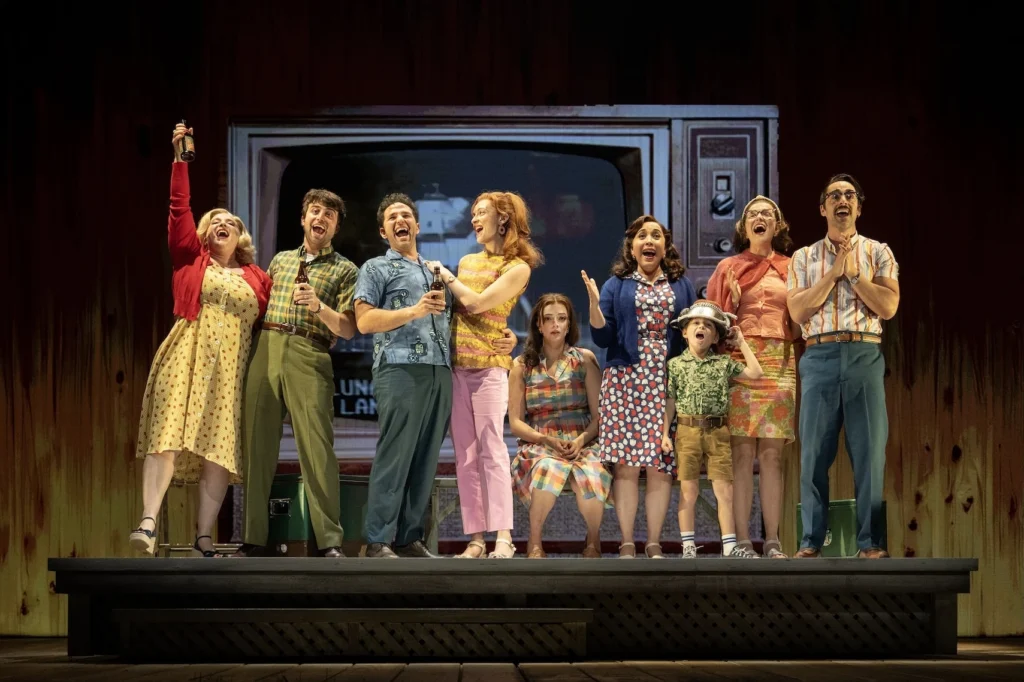
Time Out‘s Raven Snook came down on the side of charmed, calling it “a summer beach read of a musical” heavy on “Jewish nostalgia with a smattering of schmaltz.” Her verdict, in short: it may not be groundbreaking, but it’s a warm, well-sung night out, with a “lovely, lived-in chemistry” between Suskauer and Max Chernin at its center.
There’s something to be said about stories built around ordinary American Jewish life and not, say, the shtetl or some sort of catastrophe tied to the never-ending barrage of antisemitism that has come to define modern existence in the U.S. In A Walk on the Moon, viewers will be entertained by Flatbush families renting bungalows and bickering over mahjong tiles.
Add to it the fact that the bungalow-colony world the show recreates was a real institution for working-class Jewish New Yorkers that has mostly vanished, surviving in family albums and a handful of people’s childhood summers, and you’ll get why the production may appeal to a vast swath of New Yorkers. Watching it staged a short subway ride from where many of those families started carries some weight.
We won’t spoil the ending but let’s just say that the production will leave you with a sense of ambiguity that is sure to fuel your conversations for days post-show.