Get the latest food, drinks and things to do news directly to your inbox. Subscribe Now
Engage in life-like conversations with two Holocaust survivors at this new exhibit in downtown Manhattan

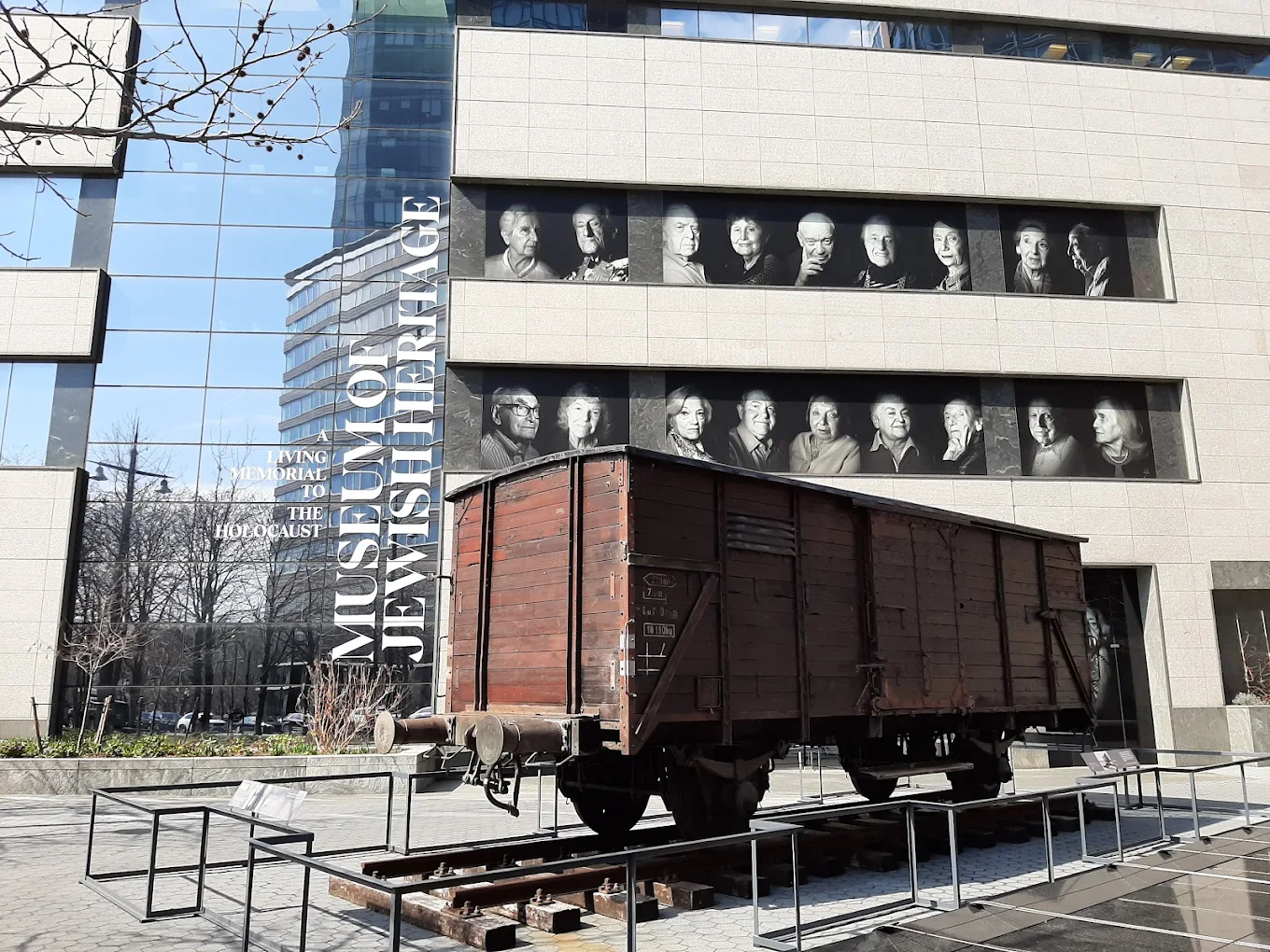
The Museum of Jewish Heritage – A Living Memorial to the Holocaust is gearing up to launch its latest exhibit, “The Common Circles Experience: New York.”
Set to debut downtown tomorrow and run through June 28, the new exhibition is comprised of two parts: the opening section, “We Are New York!,” is an immersive visual showcase that “uplifts the experiences of diverse New Yorkers,” according to an official press release, basically encouraging attendees to think about shared connections within communities that live side by side but might appear to have not much in common at first glance.
The second part of the exhibit is called “Voices Against Hate: Lessons from the Holocaust” and it uses advanced technology to allow visitors to engage in life-like conversations with two real Holocaust survivors: Anita Lasker-Wallfisch, a German-British cellist and a surviving member of the Women’s Orchestra of Auschwitz, and Alan Moskin, a World War II veteran who was drafted into the U.S. Army when he was 18 years old and participated in the liberation of the Gunskirchen concentration camp in May of 1945.
The decision to start off the exhibit with material not directly related to the Holocaust was a deliberate one meant to showcase the humanity of the victims of the massacre. “Because visitors first encounter one another as layered human beings, they can meet Anita and Alan not only as survivor and a liberator, but as individuals,” reads the official release.
Statistics about the alarming gaps in Holocaust knowledge among younger generations, paired with independent third-party research cited by the museum showing “statistically significant gains in knowledge, empathy and perspective taking among students who experienced the exhibition,” make the program feel less like a visit and more like a necessary intervention. In a moment when history is both increasingly accessible and dangerously misunderstood, the exhibit lands with a particular urgency, underscoring that it is not just about what we remember but how we carry it forward.