Get the latest food, drinks and things to do news directly to your inbox. Subscribe Now
The Warsaw Ghetto’s buried archive is the subject of a new exhibition in New York

A new exhibition at the Museum of Jewish Heritage follows the people who collected evidence of life inside the Warsaw Ghetto while facing the possibility that they would not survive it. Their work required an extraordinary calculation: someone would eventually need to tell this history and the documents had to outlive the people assembling them.
“Will These Words Reach You? The Underground Archive of the Warsaw Ghetto” opened in Battery Park City on September 18, exactly 80 years after the first portion of the archive was recovered. Developed by Warsaw’s Emanuel Ringelblum Jewish Historical Institute, the exhibition runs through February 14, 2027.
Oyneg Shabes, the clandestine group organized by historian Emanuel Ringelblum, is behind the project. The group’s work expanded into a collective operation after the Nazis sealed the ghetto in November 1940. Ringelblum drew on connections in Jewish aid organizations and intellectual circles to recruit contributors and gather accounts of what was happening around them.
The scope was remarkably broad: the archive preserved tram tickets and candy wrappers alongside testimony about persecution. Restaurant menus and invitations to cultural events also found their way into the collection. Such material offers historians a way to examine how people continued to organize their lives under conditions that were becoming increasingly murderous.
That attention to everyday detail is part of what makes the archive so significant as well: a ticket or a wrapper records something a retrospective account might leave out, keeping it required someone to decide that an ordinary fragment of life belonged in the history being written.
As deportations intensified in 1942, members began concealing their work underground. They used metal boxes and, later, milk cans. Two caches were recovered after the war, in 1946 and 1950; a third has never been found.
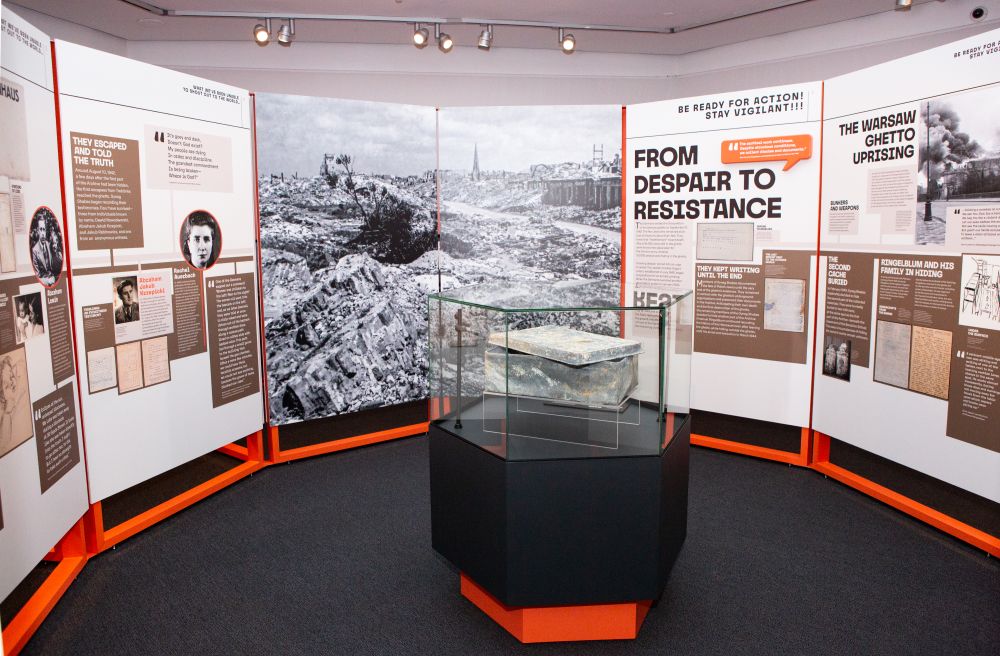
The New York exhibition includes an original box used to bury the archive. Reproductions and footage of the postwar excavation help explain how the material survived. According to the Jewish Historical Institute, the documents presented include a page of Ringelblum’s Yiddish diary and the German order announcing mass deportations from Warsaw on July 22, 1942.
As for the exhibition’s title, it comes from a diary entry by Lejzor Czarnobroda, whose testimony became part of the archive. Writing in August 1942, he addressed a future reader and wondered whether his words would reach them. That uncertainty is central to the undertaking: the contributors were creating a record for an audience they could neither identify nor know would exist.