Get the latest food, drinks and things to do news directly to your inbox. Subscribe Now
The Hampton Synagogue answers ‘NAZA’ with a double feature

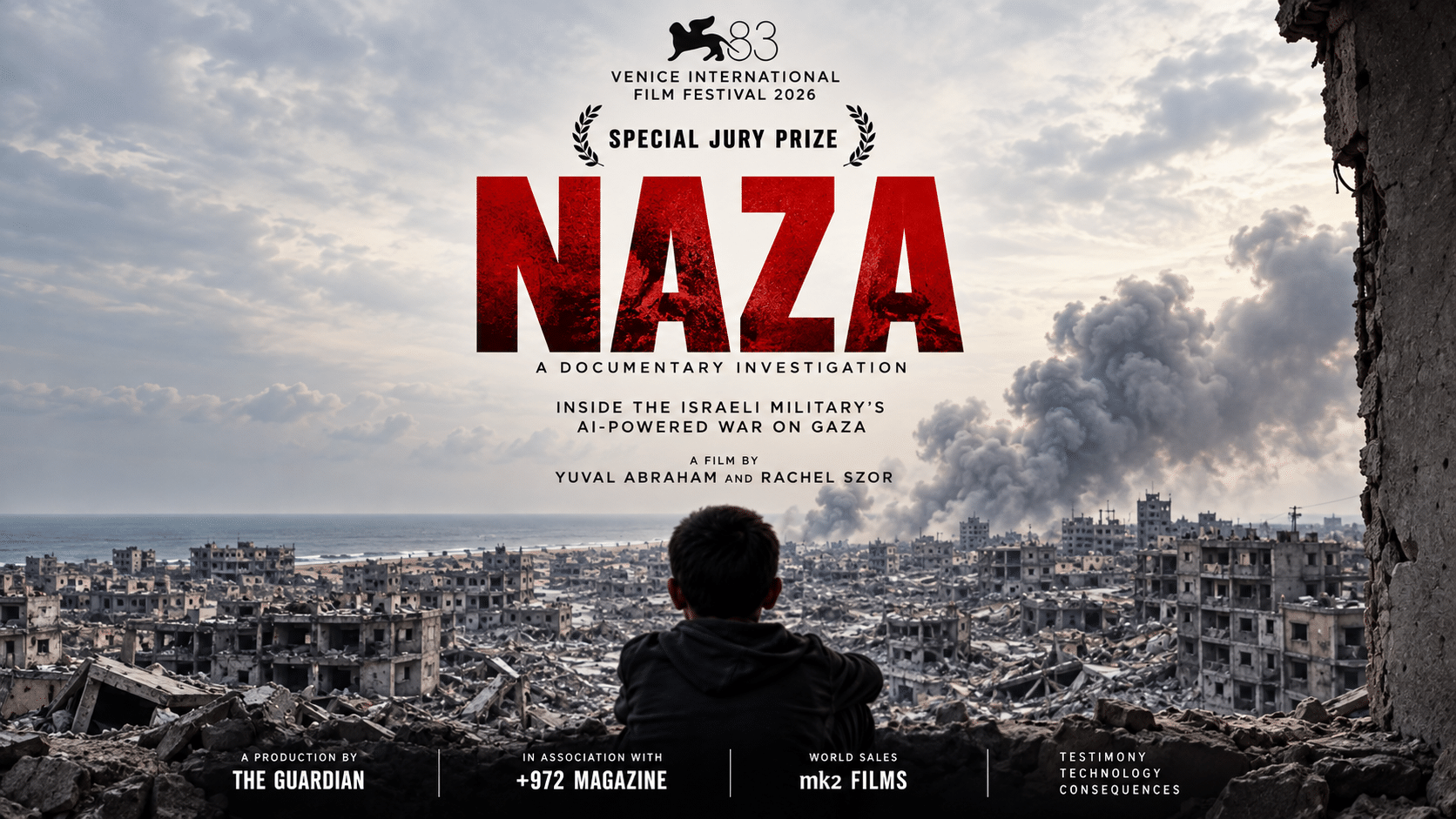
The Hamptons International Film Festival wraps Monday, but the film the East End can’t stop arguing about already screened on October 3. That would be NAZA, and this weekend the Hampton Synagogue, at 154 Sunset Avenue in Westhampton Beach, is answering it with two free screenings of its own. Rabbi Marc Schneier explained why in Dan’s Papers this week.
NAZA comes from Yuval Abraham and Rachel Szor, two of the four directors of No Other Land, the Oscar-winning 2024 documentary about the razing of Masafer Yatta in the West Bank, and is executive produced by Jonathan Glazer. It rests on testimony from 24 Israeli military and intelligence sources, faces and voices digitally altered, describing Lavender, the AI system used to generate assassination targets. The title is the military’s term for expected civilian deaths in a strike, and one interviewee says twenty became the working benchmark. The film extends reporting by +972 Magazine, Local Call and the Guardian, which produced it. It took Venice’s Special Jury Prize and includes a tribute clip to Claude Lanzmann, the director of Shoah, the nine-and-a-half-hour Holocaust documentary built entirely on testimony, a choice that lands exactly as you’d expect.
The case against it goes beyond the obvious objections to anonymous sourcing and the culture minister’s vow to revoke the filmmakers’ citizenship, which did wonders for ticket sales. The sharper objection is legal: civilian deaths alone don’t violate international law, the test is proportionality. A system that pre-counts collateral harm is, by definition, running a proportionality calculation, which is why one i24 op-ed argued the title undercuts the film’s own genocide claim. Whether those numbers were proportionate is the real question. The film’s sources answer it in only one direction.
In Sag Harbor, Temple Adas Israel wrote the festival board on September 23 saying it would rather the film not screen but supported the festival’s right to show it, and it asked for a disclaimer read aloud before the lights went down. Board chair Randy Mastro replied that “the answer to speech considered offensive is not censorship; it is more speech.”
The festival then softened its program copy and added two October 7 films as counterweights. The Choice follows bereaved Israeli families who found solace in Holocaust survivor Edith Eger’s memoir. Holding Liat follows the family of Liat Atzili, kidnapped from Nir Oz. It’s an odd pick for the pro-Israel slot, since much of the film is her father arguing with Netanyahu’s government. The festival also added a panel with John Spencer, the West Point urban-warfare scholar who has spent the war defending the IDF’s conduct in Gaza, and Richard Behar, the investigative journalist who now mostly investigates the press’s coverage of Israel.
Schneier calls that line a convenient slogan aimed at the wrong objection. His complaint is with the original billing, which promised to reveal the systems behind Israel’s “calculated mass killing” of civilians. As he puts it, “It declares the verdict before the lights go down.” So his answer is also more speech, only of a different kind, which he’s putting it into practice himself, with two nights of his own programming at the shul.
On Saturday, October 10, at 7:30pm, Michael Rapaport presents the Hamptons premiere of Am I Cancelled Yet?. The documentary follows the fallout from his post-October 7 advocacy for Israel and the hostages, including his club dates scrapped in Madison, Batavia and Hoover. Matthew Hiltzik joins him afterward. On Sunday, October 11, at 7:30pm, the synagogue and the Israeli consulate present Haley Geffen’s Safe Room, with Consul General Ofir Akunis. It follows Dr. Gedalya Fendel, who on October 7 sheltered a pregnant couple, a set of grandparents and two children whose parents had been murdered in his home. Both nights are free, each followed by a reception; RSVP to [email protected].
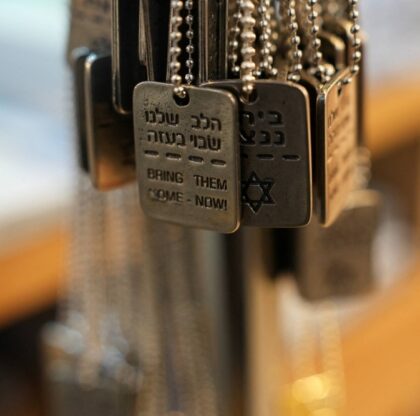
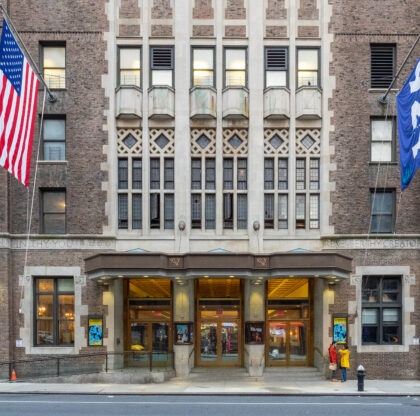
Back in the city, a six-foot tree of hostage tags is going up at the Museum of Jewish Heritage. Clearly, three years on, everyone is still arguing about how the October 7 story should be shown.
The festival and the rabbi agree that the answer to speech is more speech. They disagree only about whose.